
Orangetown City Directory Collections by Date
Orangetown city directory research begins with a shelf of related runs, not a verified townwide publication sequence. The Rockland County Reference Guide identifies the New City Library Rockland Room as the main local collection. Its dated telephone books, reverse directories, census material, newspapers, maps, and genealogy tools let a reader work from a known person or address in more than one direction. Each format has a different purpose, so a listing should be recorded as a dated association rather than proof of a continuous presence.
| Collection | Years | Where Held | Access |
|---|---|---|---|
| Nyack telephone books | 1883-1890 | New City Library Rockland Room microfilm | Historic subscriber and name lookup; check for omissions |
| Rockland County telephone books | 1910-1998 | New City Library Rockland Room microfilm | Name, business, and address context in a dated volume |
| Rockland County Cross Reference Directories | 1978-1999 | New City Library Rockland Room | Address-to-subscriber bridge, then verify in the name section |
| Federal census material | 1790-1930 locally listed | Rockland Room, NARA, and FamilySearch routes | Household snapshot; later releases follow the NARA schedule |
| New York State census and enumerations | State census 1860-1925; enumerations 1830-1920 | Rockland Room, FamilySearch, and State Archives paths | Locality, age, birthplace, and household clues |
A first or last printed Orangetown directory, its publisher, and a complete townwide run were not located in the official research. That gap matters. The 1978-1999 cross-reference material is a finite reverse-directory run, not a substitute for a complete city directory series.
Orangetown Historical Directory Runs at Rockland Room
The Rockland Room holds about 4,000 volumes and is the strongest local starting point for historical directory work. Its newspaper holdings add context that a phone listing cannot provide. The guide lists the Rockland Journal News from 1850 to the present, the Nyack Evening Star from 1892 to 1917, City and Country through 1916, and several separated Rockland County Times and Messenger runs. Search names with a hamlet label, an old street spelling, and a narrow date window.
Start in the address side of a cross-reference volume when a street is known. Note the subscriber name exactly as printed, then use the name section to look for a phone number or business connection. A telephone listing may omit an unlisted household and may name the subscriber rather than every person there. Check an adjacent year before drawing a conclusion from a single volume.
Note: Rockland Room holdings support historical research, but a listing remains a publication-time snapshot rather than a move date.
Orangetown Directory Place Names
Place names shape a directory search. Orangetown includes riverfront villages, inland hamlets, postal communities, and the former Village of South Nyack. A person who appears under Nyack in one source may be tied to South Nyack, Grand View, Piermont, Tappan, Sparkill, Pearl River, Orangeburg, Palisades, or Blauvelt in another. Preserve the source label in research notes instead of replacing it with a modern label at the start.
Nyack and the river communities also have unusually rich visual and oral-history material. Pearl River's railroad history, Sparkill's Depot Square, Tappan's crossroads history, and Palisades river references can supply useful search terms when an ordinary name search fails. A postal place is not the same thing as a legal municipality, and an address label should be checked against the record's own date.
Reading an Orangetown City Directory Entry
A local city directory page has not yet been captured in the inspected official collections. Do not assign a local publisher, abbreviation key, spouse notation, or ownership symbol until the actual Orangetown or Nyack page is in hand. The useful inventory below is a capture checklist, not a claim about what a local entry contains. Record the page, volume year, and source before transcribing any historical detail.
| Name form | Record initials, spelling, and any surname variant exactly as printed. |
|---|---|
| Street or route | Copy the address, rural route, village, or hamlet label without modernizing it. |
| Relationship clue | If a local page actually provides one, transcribe it with the page citation. |
| Business or telephone clue | Use only a field visible in the local volume, then compare another source. |
| Abbreviation or symbol | Photograph or note the volume's own key before interpreting a mark. |
- Criss-cross directory
- A reverse directory arranged from street address to subscriber or name, rather than from name to address.
- Householder index
- An index intended to group an address under a named household contact, if the particular volume includes one.
- Abbreviation key
- The volume's explanation of its shortened words or symbols. It must come from that exact volume.
Nyack Context for Orangetown Directory Resources
Nyack Library's local-history images and oral-history resources can add a photograph, place name, or remembered institution to a directory result. The Savell Local History Department serves Nyack, Upper Nyack, South Nyack, Grand View, and nearby communities. Its exact directory and yearbook inventory was not located in official sources, so contact the local-history desk about a specific surname, street, or date rather than assuming a volume is available.
An image or oral-history reference can provide community context for an historical listing. Pair it with a dated directory, census, deed, or newspaper item before using it to connect a person to a particular address.
Orangetown Directory Archive Companions
The Orangetown Museum collection covers local hamlets and villages through more than 30,000 objects and archives. Its PastPerfect catalogue is a finding aid, not an open person search. Genealogical inquiries and research appointments are the appropriate way to ask about family files, photographs, institutions, or an item's provenance. That route helps when a directory name needs a local context.
Museum catalog results should be cited as collection evidence. They can support a surname or community connection, but they do not by themselves establish that a person lived at a current address.
The Historical Society of Rockland, headquartered at the Jacob Blauvelt House, preserves county manuscripts, artifacts, photographs, and local publications. Its South of the Mountains material is available through New York Heritage as a quarterly collection from 1957 to 2013 with 225 issues. Search a family name beside a church, business, school, or hamlet term, then verify the date and identity with an independent record.
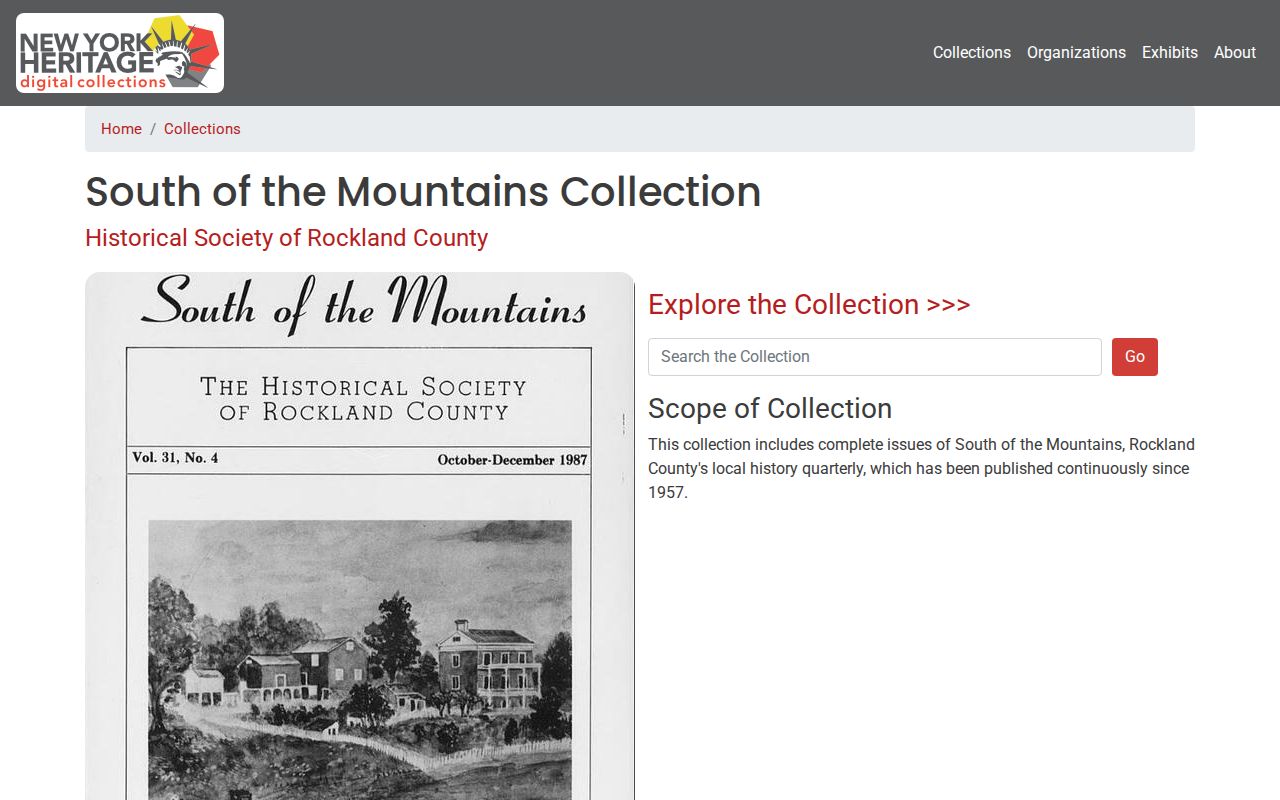
The quarterly collection supplies local narrative and spelling clues. It is strongest when paired with a direct address record rather than treated as a substitute for one.
Tracing an Orangetown Directory Household
Follow a fixed name and address through several dated sources. Two anchors are safer than one: a street plus a spouse or relative, a business reference plus a hamlet, or a legal description plus a surname. When the goal becomes a present-day address record, the separate Orangetown street directory has the current address-keyed workflow.
- Begin with the 1978-1999 cross-reference run if an address is known, and copy the source year and exact printed label.
- Check the closest Rockland County telephone-book year, or a Nyack volume for the earlier 1883-1890 period.
- Search the name and hamlet in a newspaper run for notices, family references, and date boundaries.
- Compare the closest federal or New York census listing for household composition and locality.
- Use the deed chain, obituary, cemetery, church, or probate source to test whether the results concern the same household.
A disappearance may reflect a move, death, changed subscription, altered spelling, or an unlisted number. It does not have one automatic meaning. For a one-person identity question, a resident lookup can help separate historical address association from a current record category.
Orangetown Directory Names in Newspapers
Newspapers can turn a bare Orangetown directory name into a date-tested local record. The Rockland Room's title-specific runs include the Rockland Journal News from 1850 to the present, the Nyack Evening Star from 1892 to 1917, the Rockland County Messenger in 1847-1873 and 1884-1896 runs, and the Rockland County Times in several separated periods. Nyack Library also links the Hudson River Valley historical newspaper archive. Availability varies by title and date, so a failed search in one paper does not mean a person was absent from Orangetown.
Search the name with the source-era place term, then repeat with a spouse, street, business, church, school, or nearby hamlet. Notices can bracket a move, marriage, death, civic role, legal event, or business opening. They are reported events, not a continuous address register. Pair a notice with a directory year, a tax or deed record, or a census entry before turning it into a household fact.
Nyack, South Nyack, Pearl River, Tappan, Piermont, Sparkill, Palisades, Orangeburg, and Blauvelt should be separate search terms. This simple change often respects the way an editor or indexer described the community at the time.
Orangetown Directory Research Timeline
The dates below mark confirmed tools, not the beginning or end of local life. Orangetown's historical record trail starts earlier than any one directory, and the online availability of a source does not decide whether the underlying record exists.
- 1790-1930: federal census material is listed locally, with access to later national releases governed by the NARA schedule.
- 1830-1925: Rockland Room holdings list New York enumerations from 1830-1920 and State census material from 1860-1925.
- 1883-1890 and 1910-1998: Nyack and Rockland County telephone-book runs provide dated subscriber context.
- 1896: the Library of Congress digitized Nyack Sanborn set contains 12 sheets and documents buildings and street context, not every resident.
- 1978-1999: Cross Reference Directories provide the verified local address-to-name bridge.
South Nyack's 2022 dissolution is another useful search breakpoint. Search both the former village wording and Orangetown for local government material near that transition. Note: an old directory entry identifies a dated source association, not a present-day status.